What an activity trend can tell you.
A collar can record movement. You still know the walk, the weather and the dog behind the line.
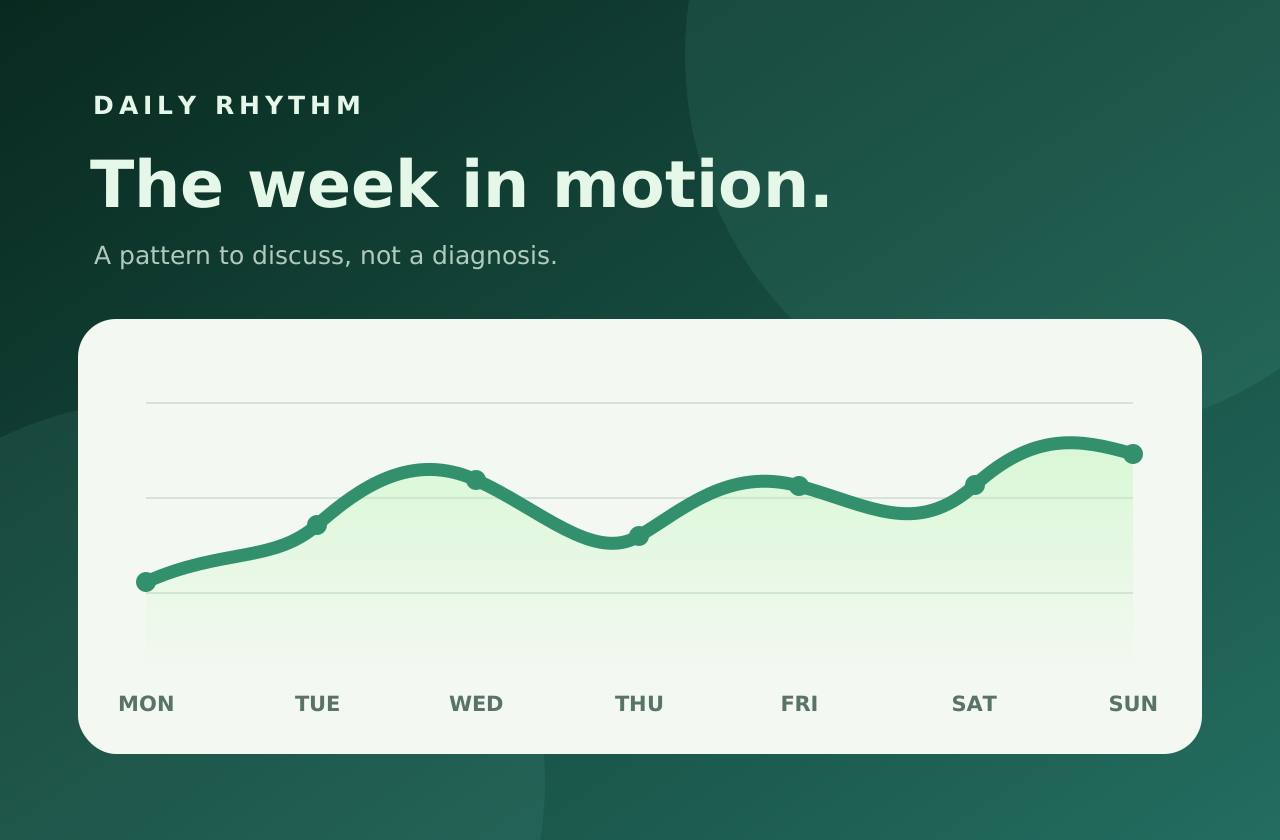
A week of activity data can be useful when it helps you notice a change from your dog’s usual routine. It is not a diagnosis. A quiet day might reflect rain, travel, a missed charging period or a genuine change worth discussing. The graph cannot tell those stories on its own.
Know what the device actually measured.
Most activity collars sense motion and use software to estimate behaviours. A real-world validation study of collar accelerometers found that algorithm accuracy varied across behaviours. Another study of attachment methods found that how a monitor is fitted can affect its activity data. Those findings apply to the studied devices and settings—not automatically to every collar on the market.
A useful view should therefore keep the device and measurement type visible, show gaps rather than drawing a continuous line through missing data, and compare your dog with their own earlier routine. It should not turn an activity count into a health score or treat one low day as a medical alert.
Add the context only you can provide.
- Was the device worn and charged for the whole period?
- Did the walk, weather, travel or household routine change?
- Did you notice a change in movement, rest, appetite or behaviour away from the device?
Whisker360’s aim is to keep a supported device’s readings distinct from your observations and laboratory measurements. A pattern can help you ask a better question at the next veterinary visit. If your companion is unwell now, contact your veterinarian rather than waiting for a trend to develop.
For education only. Device readings are not a veterinary examination or diagnosis. This article does not imply that a Whisker360 wearable integration is available.